Tracked Sales Items: More Control Over What You Sell
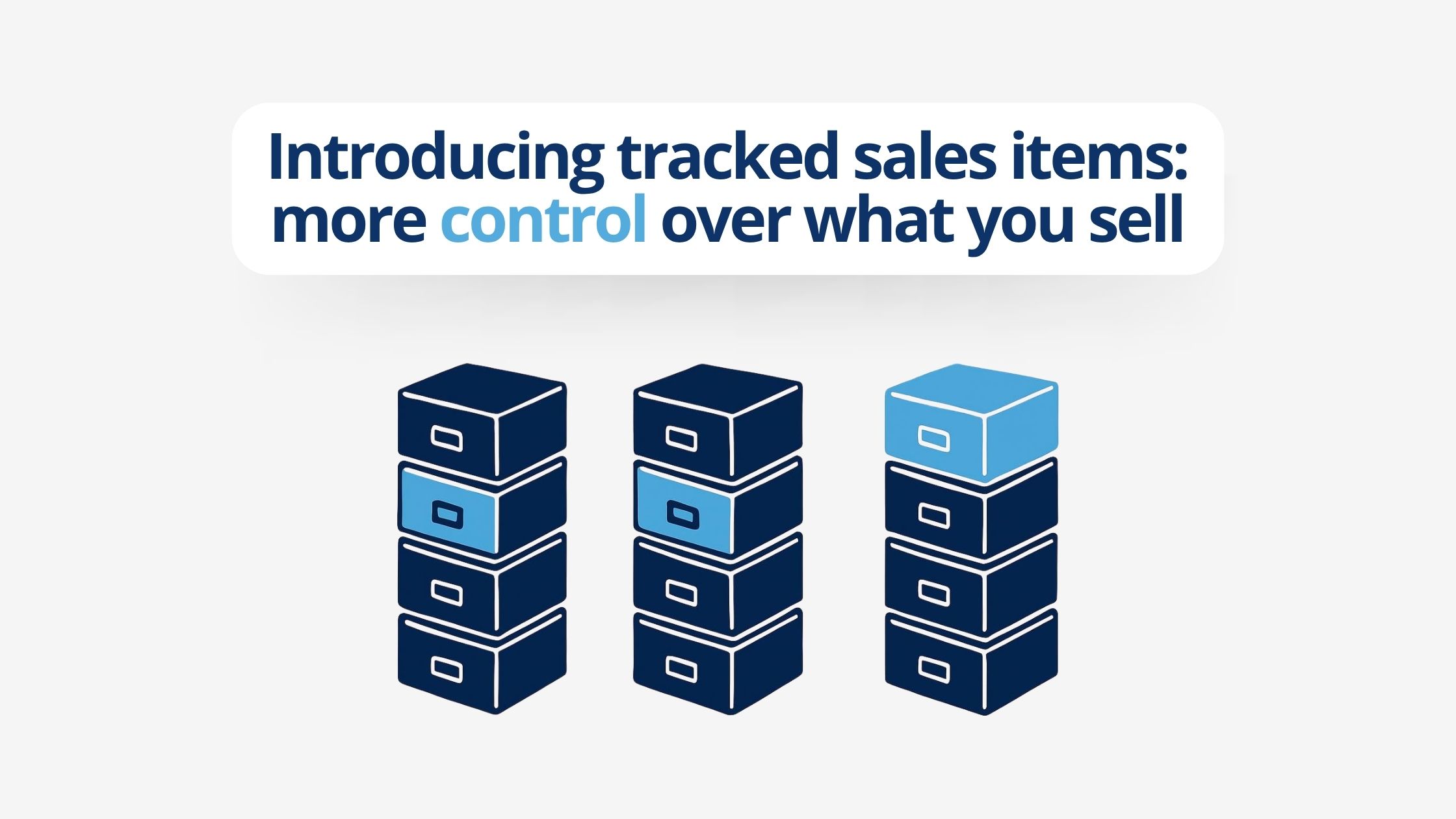
Tracking individual sales items in rental software can be difficult, especially when stock is managed in bulk.
For many rental businesses, selling items alongside hires is part of day-to-day operations; but when it comes to higher-value or serialised items, that bulk approach can make things harder than they need to be.
This update is designed to give you more control over what you sell, and clearer visibility over exactly where each item has gone.
What problem does the new “Tracked Sales Items” update solve?
HireHop has always handled rental tracking well, particularly when it comes to barcoded equipment, but sales stock has traditionally been treated as a bulk quantity. That works well for consumables like batteries or smaller items, but it creates limitations when you’re selling higher-value equipment.
If you sold an item, you could see that stock had been reduced — but not exactly which unit had been sold.
In many cases, that meant relying on notes, memory or manual processes to keep track.
With this new update, you can now track individual sales items using their specific barcodes or serial numbers.
Instead of selling from a bulk quantity, you can allocate the exact units being sold.
Before:
- You sell 3 radios
- The system deducts 3 from total stock
- There’s no clear record of which specific units were sold
After:
- You scan the barcodes of the specific radios
- The system checks out those exact units
- Inventory is updated accordingly
- The sale is fully logged against those items
If you need to track individual items by barcode or serial number, having that built directly into your system makes a big difference.
The original bulk method still exists and remains useful for consumables or situations where item-level tracking isn’t needed.
Who is this most useful for?
This is particularly helpful for businesses selling higher-value items alongside their hires.
For example, companies dealing with equipment like radios or other serialised assets benefit from being able to track exactly what’s been sold and to whom.
It’s especially useful where accountability, traceability or asset history matters.
What does this look like in practice?
This update gives you full visibility across the lifecycle of an item: you can track exactly which unit was sold, maintain accurate inventory records and crucially, avoid relying on manual notes or memory.
There’s also the option to transfer a rental asset into a tracked sales item: this is useful if you decide to sell off older rental equipment after bringing in new models, allowing you to manage that transition cleanly within the system.
Final thoughts
Tracking individual sales items doesn’t sound like a big change on the surface but for businesses dealing with higher-value stock, it removes a layer of uncertainty that often sits quietly in the background.
With this update in place, you can now look forward to fewer workarounds, better visibility and more confidence in your inventory.
If you’d like to see how tracked sales items work in practice, we’re always happy to walk you through it! Feel free to contact our knowledgeable support team to learn more.